Tuesday, April 10, 2012

Phnom Penh - Cambodia

PHNOM PENH is the capital and largest city of Cambodia. Located on the banks of the Mekong River, Phnom Penh has been the national capital since the French colonized Cambodia, and has grown to become the nation's center of economic and industrial activities, as well as the center of security, politics, economics, cultural heritage, and diplomacy of Cambodia.


Once known as the “Pearl of Asia”, it was considered one of the loveliest French-built cities in Indochina in the 1920s. Phnom Penh, along with Siem Reap and Sihanoukville, are significant global and domestic tourist destinations for Cambodia. Founded in 1434, the city is noted for its beautiful and historical architecture and attractions. There are a number of surviving French colonial buildings scattered along the grand boulevards.

Situated on the banks of the Tonlé Sap, Mekong and Bassac rivers, the Phnom Penh metropolitan area is home to more than 2 million of Cambodia’s population of over 14 million. The city is the wealthiest and most populous city in Cambodia and is home to the country’s political hub. - Wiki


We start our tour in late afternoon, we board a local boat for sunset cruise on the river. we sat off on the Tonle Sap River which famously direction each yearacting as the world's largest natural flood barrier for Mekong river. We cruise past the Royal Palace compound and arround Chrouy Changvar Peninsular on to mighty Mekong River.


...And enjoy Aspara Dance show (Khmer classical dance) and night scenery while having our dinner at Bopha Phnom Penh restaurant.


Afterwards, see the splendor of Cambodia's royal heritage by visiting the ROYAL PALACE, still the official residence of King Norodom Sihamoi, the adjacent SILVER PAGODA, also known as the Pagoda of the Emerald Buddha, and the elegant NATIONAL MUSEUM, which contains a comprehensive collection of Khmer art.


The 'Silver Pagoda'


The 'Silver Pagoda' sits next to the Royal Palace, separated by a walled walkway, but within the same larger walled compound. The Silver Pagoda's proper name is Wat Preah Keo Morokat, which means 'The Temple of the Emerald Buddha,' but has received the common moniker 'Silver Pagoda' after the solid silver floor tiles that adorn the temple building. The pagoda compound as a whole contains several structures and gardens, the primary building being the temple Wat Preah Keo Morokat and other structures including a library, various stupas, shrines, monuments, minor buildings and the galleries of the Reamker.


Wat Preah Keo Morokat is unique in several ways. It is the pagoda where the King meets with monks to listen to their sermons and where some Royal ceremonies are performed. It houses a collection of priceless Buddhist and historical objects including the 'Emerald Buddha.' And, unlike most pagodas, no monks live at the pagoda. The temple building, library and Reamker galleries were first constructed between 1892 and 1902 under King Norodom. The equestrian statue of King Norodom was set in place in 1892. Other structures such as the stupas of King Ang Doung Stupa King Norodom (1908), the Kantha Bopha memorial sanctuary (1960) and others were added later. The temple received major reconstruction in 1962 and further renovations 1985-1987, particularly to the Reamker fresco murals. Many of the temple treasures were looted during by the Khmer Rouge 1975-1979, but fortunately the Khmer Rouge chose to keep much of the collection intact for propaganda purposes.
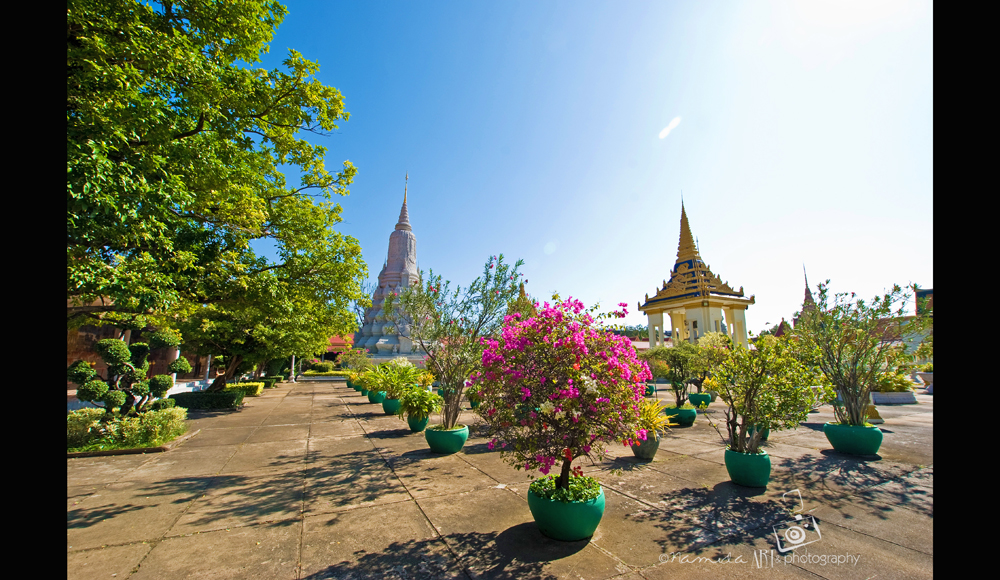


Stupa of HM King Norodom containing the ashes of the King Norodom (1834-1904). Constructed in 1908..


Stupa Of Princess Kantha Bopha

Stupa of Princess Kantha Bopha The memorial sanctuary of the beloved daughter of the former King Sihanouk. Princess Kantha Bopha passed in 1952 at the age of four, succumbing to leukemia. The stupa was built in 1960.


Other activities is enjoying shopping at Factory outlets , Central Market and Russian Market (Toul Tom Pong Market) the only place you can get branded textile from factory and various selection of quality handicrafts and silk as well as original artistic creation -painting ,sprints, carvings and especially jewellary and Cambodia stone with reasonable prices


People Of Phnom Penh

Cambodian people and culture are great. They do a lot of their living outdoors.
It is very interesting and much fun to watch the people selling and buying, taking a walk and enjoying the mild air and the golden sun of the evening.


Friday, February 17, 2012

Ho Chi Minh City - Saigon

Buzzing motorbikes, packed with people  and whatever else fits on them. Screaming horns. Strenuous street hawkers., Saigon (Vietnam)  with its bustling cities will captivate you.


Places of interest - Saigon offers some interesting sites:

Saigon Central Post Office (Vietnamese: Bưu điện Thành phố Hồ Chí Minh) is a post office in the downtown Ho Chi Minh City, near Saigon Notre-Dame Basilica, the city's main church. The building was constructed when Vietnam was part of French Indochina in the early 20th century. It has a Gothic architectural style. It was designed and constructed by the famous architect Gustave Eiffel in harmony with the surrounding area. Today, the building is a tourist attraction.


Saigon Notre-Dame Basilica -officially Basilica of Our Lady of The Immaculate Conception is a cathedral located in the downtown of Ho Chi Minh City, Vietnam. Established by French colonists, the cathedral was constructed between 1863 and 1880. It has two bell towers, reaching a height of 58 meters (190 feet). -wiki


The Saigon Opera House in Ho Chi Minh City, Vietnam, is an example of French Colonial architecture in Vietnam.
Built in 1897 by French architect Ferret Eugene, the 800 seat building was used as the home of the Lower House assembly of South Vietnam after 1956. It was not until 1975 that it was again used as a theatre, and restored in 1995. -wiki


Bitexco Financial Tower (right) is a skyscraper in Ho Chi Minh City, Vietnam, owned by Bitexco Group, a Vietnamese company. With 68 floors above ground and three basements, the building has a height of 262.5 metres (861 ft), making it the 124th tallest building in the world. It was designed by Carlos Zapata Studio, and is located in the business district of the city. The tower was the tallest building in Vietnam from 2010 to early 2011 when Keangnam Hanoi Landmark Tower topped out on 24 January 2011. -wiki


The City Hall: Built between 1902 and 1908 as the Hôtel de Ville, this striking cream and yellow French colonial building, now formally known as the People's Committee Hall, is beautifully illuminated at night.


The War Remnants Museum: Formerly known as the Museum of Chinese and American War Crimes, the museum was opened just five months after the fall of the South. On the one hand, as indicated by the museum's original name, you will not find a neutral accounting of war crimes committed by both sides. On the other hand, the museum also makes a strong call for peace. Outside, there are helicopters, jets, tanks and other bits of armament. Inside, the exhibitions, informative but sometimes graphic, will leave no doubt as to the human cost of war.


The Cu Chi Tunnels: About 40 miles northwest of Ho Chi Minh City, the Cu Chi Tunnels are an elaborate underground community made up of over 200 miles of tunnels and chambers below the city. The tunnels were dug with simple tools and bare hands in the 1940s, during the French occupation, and further expanded during the Vietnam War in the 1960s as a base for guerrilla operations against the Americans and South Vietnamese. Despite intense American bombardments in the area, the people of Cu Chi were able to continue their lives beneath the soil, where they slept, ate, planned attacks, healed their sick, and taught their young. Some even wed and gave birth underground. Multiple agencies in Ho Chi Minh City offer tours to the Cu Chi Tunnels. Be prepared to get dirty if you want to crawl through the tunnels yourself!


The Mekong Delta: The Mekong Delta, known in Vietnamese as the "Nine Dragon River Delta," is the primary waterway of southern Vietnam and the center of the country's rice production. If you are seeking one of the images of Vietnamese women in their conical hats tending emerald green rice paddies you'll find it here. Boat tours are available with an almost infinite variety of itineraries: afternoon cruises, overnight trips, or 2-3 days tours, which can be particularly rewarding. It is even possible to sail to Phnom Penh in Cambodia.


Ben Thanh Market is the largest old-style market in the central district, with several hundred small stalls stuffed with goods on almost impassably narrow aisles. As a result of its popularity with tourists, the market is now divided about half and half between tourist goods (jeans, t-shirts, smaller souvenirs) and the stuff of regular life (fruit and vegetables, rice, kitchen wares, flowers, meat, fast food, and local-style pickled fruits and candies). Most items are not price-marked, and vendors always quote a 50-100% higher price to tourists vs. locals, so to save some money prepare to haggle!

Night Market: Just outside Ben Thanh Market, the Night Market starts up when the Ben Thanh market closes at 5 p.m., with similar merchandise and food for sale.


 Hard Rock Cafe - Ho Chi Minh City